

Hey there! As a supplier of 2 Notch Utility Blades, I often get asked whether these blades can cut through plastic pipes. It's a valid question, especially considering the wide range of applications for both utility blades and plastic pipes. In this blog post, I'll dive into the details and give you a comprehensive answer.
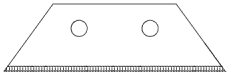
First off, let's talk about what 2 Notch Utility Blades are. These blades are designed with two notches, which can provide better grip and control when using a utility knife. They're commonly used in various industries for tasks like cutting cardboard, paper, and even thin sheets of metal. But can they handle plastic pipes?
The answer is: it depends. There are several factors that come into play when determining whether a 2 Notch Utility Blade can cut through a plastic pipe.
The Type of Plastic Pipe
Plastic pipes come in different types, each with its own set of properties. Some of the most common types include PVC (Polyvinyl Chloride), CPVC (Chlorinated Polyvinyl Chloride), PE (Polyethylene), and PP (Polypropylene).
- PVC Pipes: These are widely used for plumbing and drainage systems. PVC is relatively rigid and has a moderate hardness. A sharp 2 Notch Utility Blade can usually cut through thin - walled PVC pipes, say those with a wall thickness of around 1 - 2 mm. However, for thicker PVC pipes, it might be a struggle. The blade may start to dull quickly, and the cutting process can become inefficient and time - consuming.
- CPVC Pipes: Similar to PVC but more heat - resistant. CPVC pipes are often used in hot water supply systems. They are generally a bit tougher than PVC. A 2 Notch Utility Blade can cut through very thin CPVC pipes, but for standard - sized CPVC pipes used in plumbing, it's not the ideal tool.
- PE Pipes: Polyethylene pipes are known for their flexibility and durability. They are commonly used for water supply, gas distribution, and irrigation. PE pipes can be quite tough, especially high - density polyethylene (HDPE) pipes. A 2 Notch Utility Blade will likely have a hard time cutting through PE pipes, as the material has a tendency to stretch rather than be cleanly cut.
- PP Pipes: Polypropylene pipes are lightweight and have good chemical resistance. They are used in various industrial applications. Similar to PE pipes, PP pipes can be difficult to cut with a 2 Notch Utility Blade due to their flexibility and toughness.
The Thickness of the Pipe
As mentioned earlier, the thickness of the plastic pipe plays a crucial role. Thin - walled plastic pipes, with a wall thickness of less than 2 mm, are more likely to be cut by a 2 Notch Utility Blade. The blade can penetrate the material more easily and make a relatively clean cut.
On the other hand, thick - walled plastic pipes, such as those with a wall thickness of 5 mm or more, are a different story. The blade will have to work much harder to cut through the extra material. It may bend or break, and the cutting edge will wear out rapidly.
The Sharpness of the Blade
A sharp blade is essential for any cutting task. A brand - new 2 Notch Utility Blade has a better chance of cutting through plastic pipes compared to a dull one. When a blade is sharp, it can penetrate the plastic more easily, reducing the amount of force required.
Over time, as the blade is used, it will start to dull. Dull blades not only make the cutting process more difficult but can also cause the plastic to melt or deform due to the increased friction. So, if you're planning to use a 2 Notch Utility Blade to cut plastic pipes, make sure to use a fresh, sharp blade.

The Cutting Technique
The way you use the blade also matters. When cutting plastic pipes, it's important to apply steady, even pressure. Avoid using too much force at once, as this can cause the blade to break or the plastic to crack.
It's also a good idea to make multiple passes with the blade. Start by scoring the surface of the pipe lightly, and then gradually deepen the cut with each pass. This can help you achieve a cleaner and more precise cut.
Now, let's talk about some alternatives to using a 2 Notch Utility Blade for cutting plastic pipes.
- Pipe Cutters: These are specifically designed for cutting plastic pipes. They come in different types, such as manual pipe cutters and power - operated pipe cutters. Manual pipe cutters are easy to use and can make quick, clean cuts on pipes of various sizes.
- Hacksaws: A hacksaw with a fine - toothed blade can also be used to cut plastic pipes. It may take a bit more time and effort compared to a pipe cutter, but it can be a good option if you don't have a pipe cutter on hand.
However, despite the limitations, there are still some situations where a 2 Notch Utility Blade can be useful for working with plastic pipes. For example, if you need to make a small notch or trim a thin edge on a plastic pipe, a 2 Notch Utility Blade can do the job.
At our company, we offer a range of high - quality 2 Notch Utility Blades. In addition to these, we also have other types of blades that might be more suitable for cutting plastic pipes or other materials. Check out our Trapezoid Blades for Utility Knives, Standard Trapezoid Blades Extra Wide, and Trapezoidal Shaped Blades With One - sided Waved Grinding. These blades have unique designs that can provide better cutting performance in different applications.
If you're in the market for utility blades or have any questions about whether our blades are suitable for your specific needs, don't hesitate to reach out. We're here to help you find the right cutting solution for your projects. Whether you're a professional tradesperson or a DIY enthusiast, we can provide you with the tools you need. Just get in touch, and we can start a conversation about your requirements and how our products can meet them.
References
- "Plastic Pipe Handbook" by the Plastic Pipe Institute
- Various technical documents from plastic pipe manufacturers
So, in conclusion, while 2 Notch Utility Blades can cut through some thin - walled plastic pipes under the right conditions, they are not the go - to tool for cutting most standard - sized plastic pipes. But they still have their uses in certain situations, and with the right technique and a sharp blade, you can get some work done.


