

As a supplier of Allfit Trapezoid Blades, I am often asked whether these blades are suitable for cutting non - metallic materials. This question is of great significance as the demand for cutting non - metallic materials has been on the rise in various industries, such as woodworking, plastics processing, and composite material manufacturing. In this blog, I will delve into the characteristics of Allfit Trapezoid Blades and analyze their suitability for cutting non - metallic materials.
Characteristics of Allfit Trapezoid Blades
Allfit Trapezoid Blades are designed with several features that make them stand out in the market. First of all, they are made from high - quality materials. The blade's base material is carefully selected to ensure high strength and toughness. This means that the blades can withstand the stress and impact during the cutting process without easily breaking or deforming.
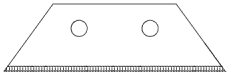
The cutting edge of Allfit Trapezoid Blades is precisely ground. The trapezoidal shape itself provides a unique cutting advantage. It allows for a more efficient transfer of cutting force, which can lead to cleaner and more precise cuts. Moreover, the blades are available in different specifications and configurations. For example, you can find Standard Trapezoid Blades Extra Wide that are suitable for applications where a wider cutting width is required. And Trapezoidal Shaped Blades With One - sided Waved Grinding offer enhanced cutting performance in certain scenarios.
Cutting Non - Metallic Materials: General Considerations
Non - metallic materials have different physical and mechanical properties compared to metals. For instance, wood is a fibrous material, plastics can be soft or hard with different melting points, and composite materials often consist of multiple layers with different characteristics. When cutting non - metallic materials, factors such as cutting speed, feed rate, and the type of cutting tool are crucial.

Cutting speed affects the heat generation during the cutting process. If the cutting speed is too high, it may cause overheating, which can lead to melting of plastics or charring of wood. Feed rate, on the other hand, determines the amount of material removed per unit time. A proper balance between cutting speed and feed rate is necessary to achieve a good cutting result.
Suitability of Allfit Trapezoid Blades for Different Non - Metallic Materials
Wood
Wood is one of the most commonly cut non - metallic materials. Allfit Trapezoid Blades are well - suited for wood cutting. The trapezoidal shape of the blade helps to reduce the resistance when cutting through the wood fibers. The sharp cutting edge can easily slice through the wood, resulting in smooth and clean cuts. Whether it is softwood or hardwood, the high - quality material of the blade ensures long - term durability. For example, in furniture manufacturing, where precision cuts are required, Allfit Trapezoid Blades can meet the high - standard requirements.
Plastics
When it comes to cutting plastics, Allfit Trapezoid Blades also have their advantages. The precise grinding of the cutting edge allows for a clean cut without causing excessive melting or deformation of the plastic. However, different types of plastics have different properties. For soft plastics, a lower cutting speed may be required to prevent the material from sticking to the blade. For hard plastics, the high strength of the Allfit Trapezoid Blades can ensure that the blade can withstand the cutting force without chipping.
Composite Materials
Composite materials are becoming increasingly popular in various industries due to their excellent performance. Cutting composite materials can be challenging because they often consist of multiple layers with different hardness and properties. Allfit Trapezoid Blades can handle composite materials well. The trapezoidal design helps to separate the different layers during the cutting process, reducing the risk of delamination. The blade's ability to maintain its sharpness over time is also important when cutting composite materials, as it ensures consistent cutting quality.
Case Studies
Let's take a look at some real - world examples to further illustrate the suitability of Allfit Trapezoid Blades for cutting non - metallic materials.
A furniture manufacturing company was using traditional blades for cutting wood. They were facing issues such as rough cuts and frequent blade replacement. After switching to Allfit Trapezoid Blades, they noticed a significant improvement in the cutting quality. The smooth cuts reduced the amount of post - processing required, which saved both time and labor costs. Moreover, the longer lifespan of the Allfit Trapezoid Blades meant less frequent blade replacement, resulting in cost savings in the long run.
In a plastics processing factory, they were struggling with cutting a new type of hard plastic. The old blades were quickly worn out and the cuts were not clean. By using Allfit Trapezoid Blades, they were able to achieve clean cuts with a reduced cutting force. The blades also showed good resistance to wear, which increased the productivity of the factory.
Conclusion
In conclusion, Allfit Trapezoid Blades are highly suitable for cutting non - metallic materials. Their unique trapezoidal design, high - quality material, and precise grinding make them a reliable choice for various non - metallic cutting applications. Whether it is wood, plastics, or composite materials, these blades can provide clean, precise, and efficient cuts.
If you are in the market for high - quality blades for cutting non - metallic materials, I encourage you to consider Allfit Trapezoid Blades. We are committed to providing the best products and services to our customers. If you have any questions or are interested in purchasing our blades, please feel free to contact us for further discussion and negotiation.
References
- "Cutting Technology of Non - Metallic Materials", Industrial Cutting Research Institute
- "Advances in Blade Design for Non - Metallic Cutting", Journal of Cutting Tools and Applications


