

As a provider of Hook Blades for Roofing, I've had numerous conversations with roofing professionals, DIY enthusiasts, and even curious homeowners about the unique design of these tools. One question that frequently arises is: What is the purpose of the hook on hook blades for roofing? In this blog post, I'll delve into the details of this feature and explain why it's an essential component for roofing tasks.
Precision Cutting and Control
The hook on a hook blade serves a crucial function in providing precision cutting. When working on a roof, accuracy is paramount. Whether you're installing shingles, underlayment, or other roofing materials, a clean and precise cut can make a significant difference in the overall quality of the installation. The hook allows the user to easily guide the blade along the edge of the material, ensuring a straight and even cut.
For example, when cutting shingles, the hook can be used to follow the contour of the roof line or to make precise cuts around vents, chimneys, or other roof penetrations. This level of control is difficult to achieve with a straight blade, as it can easily slip or veer off course. The hook acts as a guide, keeping the blade on track and preventing it from cutting into adjacent materials.
Ease of Use in Tight Spaces
Roofing work often involves working in tight and confined spaces. The hook on a hook blade makes it easier to maneuver the tool in these areas. Unlike a straight blade, which may require more space to operate, the hook can be inserted into narrow gaps and used to cut materials from the inside out.
This is particularly useful when working around eaves, valleys, or other areas where access is limited. The hook allows the user to reach into these spaces and make cuts without having to contort their body or use excessive force. This not only makes the job easier but also reduces the risk of injury.
Efficient Removal of Old Roofing Materials
Another important purpose of the hook on hook blades is for the efficient removal of old roofing materials. When replacing a roof, it's necessary to remove the existing shingles, underlayment, and other materials. The hook can be used to grab and pull up these materials, making the removal process quicker and more efficient.
The hook's shape allows it to get under the edges of the shingles and lift them up without causing damage to the underlying roof deck. This is especially important when working with fragile or brittle materials, such as asphalt shingles. By using the hook to remove the old materials, you can minimize the risk of tearing or breaking them, which can save time and money on cleanup.
Versatility in Different Roofing Applications
Hook blades are versatile tools that can be used in a variety of roofing applications. In addition to cutting and removing shingles, they can also be used for cutting other roofing materials, such as rubber membranes, metal flashing, and insulation. The hook's design makes it suitable for both straight cuts and curved cuts, allowing it to be used in a wide range of situations.
For example, when installing a rubber membrane roof, the hook can be used to cut the membrane to size and shape. It can also be used to make precise cuts around corners and edges, ensuring a tight and secure fit. Similarly, when working with metal flashing, the hook can be used to cut and shape the flashing to fit around roof penetrations and other irregularities.
Durability and Longevity
As a provider of Hook Blades for Roofing, I understand the importance of durability and longevity in roofing tools. The hook on a hook blade is designed to withstand the rigors of roofing work. It is typically made from high-quality materials, such as carbon steel or stainless steel, which are resistant to corrosion and wear.
The hook's shape also helps to distribute the cutting force evenly, reducing the stress on the blade and preventing it from breaking or bending. This means that you can rely on your hook blade to perform consistently over time, even under heavy use.
Conclusion
In conclusion, the hook on hook blades for roofing serves several important purposes. It provides precision cutting and control, makes it easier to use the tool in tight spaces, allows for efficient removal of old roofing materials, offers versatility in different roofing applications, and ensures durability and longevity. Whether you're a professional roofer or a DIY enthusiast, a hook blade is an essential tool for any roofing project.
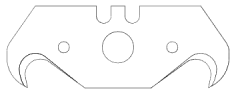

If you're interested in purchasing Hook Blades for Roofing, Hook Blades for Roofing, Hook Razor Blade, or Hook Blades for Shingles, please feel free to contact us. We offer a wide range of high-quality hook blades at competitive prices. Our team of experts is also available to provide you with advice and support on your roofing projects.
References
- "Roofing Handbook" by the National Roofing Contractors Association
- "The Complete Guide to Roofing" by Black & Decker


