

Hey there! I'm a supplier of Heavy Duty Hook Blades, and I've seen firsthand how important it is to keep these blades sharp. A dull hook blade can make your work a real pain, whether you're roofing or working with shingles. In this blog, I'll share some tips on how you can sharpen heavy duty hook blades right at home.
First off, let's talk about why it's so crucial to have sharp hook blades. When you're using Hook Blades for Roofing or Hook Blades for Shingles, a sharp blade cuts through materials cleanly and efficiently. It reduces the effort you need to put in, and it also gives you a much cleaner finish. On the other hand, a dull blade can tear the material, making your work look messy and taking a lot more time.
Now, before you start sharpening, you'll need to gather a few tools. You'll need a sharpening stone, a honing oil, and a pair of safety gloves. The sharpening stone is the key tool here. You can find different types of sharpening stones, like coarse and fine ones. The coarse stone is great for removing a lot of material quickly if your blade is really dull, while the fine stone is used for getting that final, smooth edge.
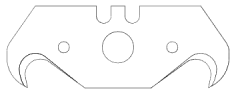

The first step is to prepare your sharpening stone. Pour a little bit of honing oil onto the stone. The oil helps to lubricate the stone and the blade, and it also helps to carry away the metal shavings that come off the blade as you sharpen it. Spread the oil evenly across the surface of the stone using a cloth or your finger.
Next, put on your safety gloves. Safety first, right? You don't want to cut yourself while you're sharpening the blade. Once you're all set, hold the blade firmly in one hand. Make sure you have a good grip on it. You're going to start with the coarse side of the sharpening stone if your blade is very dull.
Place the blade on the stone at a 20 - 25 - degree angle. This is the ideal angle for most heavy - duty hook blades. Start moving the blade across the stone in a smooth, circular or back - and - forth motion. Apply a little bit of pressure as you move the blade. You want to make sure that you're sharpening the entire edge of the blade evenly. Keep doing this for about 10 - 15 strokes on each side of the blade. As you're sharpening, you'll see the metal shavings mixing with the honing oil on the stone.
After you've done a few strokes on the coarse side, take a look at the blade. You should start to see a bit of a shine on the edge, which means you're starting to remove the dull part. If your blade was extremely dull, you might need to do more strokes on the coarse side. But once you're satisfied that you've removed most of the dullness, it's time to switch to the fine side of the sharpening stone.
The process is the same on the fine side, but you'll use lighter pressure. Move the blade across the fine stone in the same smooth motion, making sure to cover the entire edge of the blade. Do about 15 - 20 strokes on each side of the blade. This will help to smooth out the edge and give it a really sharp finish.
As you're sharpening, you might notice that the honing oil gets a bit dirty with the metal shavings. You can wipe the stone clean with a cloth and add a little more honing oil if needed. This will keep the sharpening process going smoothly.
Once you've finished sharpening on the fine side, rinse the blade under running water to remove any remaining honing oil and metal shavings. Dry the blade thoroughly with a clean cloth. You can then use a piece of paper to test the sharpness of the blade. If it cuts through the paper easily, then your blade is nice and sharp.
Another thing to keep in mind is that you should sharpen your heavy - duty hook blades regularly. If you use them often, you might need to sharpen them every few weeks or so. Regular sharpening will extend the life of your blades and keep them performing at their best.
Now, if you're using Heavy Duty Hook Blades from my supply, I can tell you that they're made from high - quality materials. But even the best blades will get dull over time. That's why it's so important to know how to sharpen them at home.
In addition to using a sharpening stone, there are also some other methods you can try. For example, you can use a bench grinder. However, this method is a bit more dangerous and requires more skill. If you're going to use a bench grinder, make sure you follow all the safety instructions carefully. You need to control the speed and the pressure properly to avoid over - heating the blade, which can damage the temper of the steel.
One more tip is to store your sharpened blades properly. After you've sharpened your blade, you can use a blade cover to protect the edge. This will prevent the blade from getting dull again due to accidental bumps or scratches.
Well, there you have it! That's how you can sharpen heavy - duty hook blades at home. It might seem a bit tricky at first, but with a little practice, you'll be a pro at it. And remember, having sharp blades makes your work so much easier and more efficient.
If you're in the market for high - quality Heavy Duty Hook Blades, or if you have any questions about sharpening or using them, don't hesitate to reach out. I'm here to help you get the most out of your tools. Whether you're a professional roofer or a DIY enthusiast, having the right blades and knowing how to maintain them is key. So, let's get in touch and start a conversation about your blade needs.
References
- "The Complete Guide to Knife Sharpening" by John Doe
- "Tool Maintenance for Professionals" by Jane Smith


