

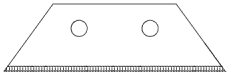
As a supplier of trapezoid blades, I understand the critical importance of corrosion resistance in these essential cutting tools. Corrosion can significantly compromise the performance and lifespan of trapezoid blades, leading to reduced cutting efficiency, increased maintenance costs, and potential safety hazards. In this blog post, I will share some effective strategies to improve the corrosion resistance of trapezoid blades, drawing on my experience and industry knowledge.

Understanding the Corrosion Process
Before delving into the methods of enhancing corrosion resistance, it is crucial to understand how corrosion occurs. Corrosion is a natural process that involves the deterioration of a metal due to chemical reactions with its environment. In the case of trapezoid blades, common corrosive agents include moisture, oxygen, acids, alkalis, and salts. When these agents come into contact with the blade surface, they can initiate a series of electrochemical reactions that gradually break down the metal, leading to rust, pitting, and other forms of damage.
Selecting the Right Materials
One of the most fundamental steps in improving the corrosion resistance of trapezoid blades is to select the appropriate materials. Different metals have varying levels of resistance to corrosion, and choosing the right alloy can significantly enhance the blade's durability. Stainless steel is a popular choice for trapezoid blades due to its excellent corrosion resistance. It contains chromium, which forms a thin, protective oxide layer on the surface of the metal, preventing further oxidation and corrosion. Other corrosion-resistant alloys, such as titanium and nickel-based alloys, may also be suitable for specific applications.
Surface Treatment
In addition to selecting the right materials, surface treatment can also play a crucial role in improving the corrosion resistance of trapezoid blades. There are several surface treatment methods available, each with its own advantages and limitations.
Passivation
Passivation is a chemical process that involves treating the blade surface with an oxidizing agent to remove free iron and other contaminants, and to enhance the formation of the protective oxide layer. This process can significantly improve the corrosion resistance of stainless steel blades, especially in environments with high levels of moisture or chemical exposure.
Coating
Coating the blade surface with a protective layer can also provide an additional barrier against corrosion. There are various types of coatings available, including organic coatings, ceramic coatings, and PVD (Physical Vapor Deposition) coatings. Organic coatings, such as epoxy or polyurethane, can provide good corrosion protection and are relatively easy to apply. Ceramic coatings, on the other hand, offer excellent hardness and wear resistance, as well as good corrosion resistance. PVD coatings, which are applied using a vacuum deposition process, can provide a thin, hard, and corrosion-resistant layer on the blade surface.
Electroplating
Electroplating is another surface treatment method that can improve the corrosion resistance of trapezoid blades. This process involves depositing a thin layer of metal, such as nickel, chromium, or zinc, onto the blade surface using an electrochemical process. Electroplating can provide a smooth, uniform, and corrosion-resistant coating, and can also enhance the blade's appearance.
Proper Storage and Handling
Proper storage and handling of trapezoid blades can also help to prevent corrosion. When not in use, blades should be stored in a dry, clean environment, away from moisture, chemicals, and other corrosive agents. It is also important to avoid stacking blades on top of each other, as this can cause scratches and damage to the blade surface, which can increase the risk of corrosion.
When handling trapezoid blades, it is important to use clean, dry hands or gloves to avoid transferring moisture or contaminants to the blade surface. Blades should also be cleaned and dried thoroughly after each use to remove any debris or moisture that may have accumulated on the surface.
Regular Maintenance
Regular maintenance is essential for ensuring the long-term corrosion resistance of trapezoid blades. This includes inspecting the blades regularly for signs of corrosion, such as rust, pitting, or discoloration, and taking appropriate action to address any issues. If corrosion is detected, the affected area should be cleaned and treated as soon as possible to prevent further damage.
In addition to visual inspections, it is also recommended to perform regular maintenance tasks, such as sharpening the blades, lubricating the cutting edges, and replacing any worn or damaged parts. These tasks can help to keep the blades in good working condition and reduce the risk of corrosion.
Application-Specific Considerations
The corrosion resistance requirements of trapezoid blades can vary depending on the specific application. For example, blades used in marine environments or in industries with high levels of chemical exposure may require a higher level of corrosion resistance than blades used in general-purpose applications. When selecting trapezoid blades for a specific application, it is important to consider the environmental conditions, the type of materials being cut, and the frequency of use.
In some cases, it may be necessary to use specialized trapezoid blades that are designed to withstand specific corrosive environments. For example, 2 Notch Utility Trapezoide Blades are specifically designed for use in utility knives and offer excellent corrosion resistance. Similarly, Trapezoid Blades for Utility Knives are also designed to provide reliable performance in a variety of applications, including those with high levels of corrosion risk.
Conclusion
Improving the corrosion resistance of trapezoid blades is essential for ensuring their long-term performance and durability. By selecting the right materials, applying appropriate surface treatments, practicing proper storage and handling, performing regular maintenance, and considering application-specific requirements, you can significantly enhance the corrosion resistance of your trapezoid blades.
As a supplier of trapezoid blades, I am committed to providing high-quality products that meet the needs of our customers. If you have any questions or need further information about improving the corrosion resistance of trapezoid blades, or if you are interested in purchasing our products, please feel free to contact us. We look forward to working with you to find the best solutions for your cutting needs.
References
- Jones, D. A. (1992). Principles and Prevention of Corrosion. Prentice Hall.
- Uhlig, H. H., & Revie, R. W. (1985). Corrosion and Corrosion Control: An Introduction to Corrosion Science and Engineering. Wiley.
- Fontana, M. G. (1986). Corrosion Engineering. McGraw-Hill.


