

Hey there, fellow adventure seekers! I'm a supplier of Hook Blades, and today, I'm diving deep into a question that's been floating around in the kayaking community: Are Hook Blades suitable for kayaking? Let's paddle through this topic and find out!
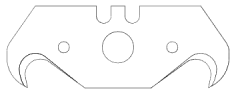
First off, let's talk a bit about what Hook Blades are. They're not just your ordinary blades. They've got a unique shape, with a hooked end that gives them some special characteristics. You might be more familiar with Hook Blades in other contexts. For example, Hook Blades for Roofing are commonly used in the construction industry to handle roofing materials. And Hook Blades for Shingles are great for working with shingles. There are also Heavy Duty Hook Blades that can take on tough jobs. But can they make a splash in the kayaking world?
When it comes to kayaking, the paddle is your main tool. It's what propels you through the water, helps you steer, and gives you control over your kayak. The design of a paddle blade plays a huge role in how well it performs. Traditional kayak paddle blades are usually flat or have a slight curve, which is optimized for slicing through the water efficiently. But what about Hook Blades?
One of the potential advantages of using Hook Blades in kayaking is the extra grip they can provide. The hooked end can dig into the water a bit more, which might give you more power with each stroke. Imagine you're in a strong current or trying to make a quick turn. That extra grip could come in handy. It's like having a better hold on the water, allowing you to transfer more of your energy into forward motion.
Another aspect to consider is the durability of Hook Blades. Our Heavy Duty Hook Blades are built to last. They're made from high - quality materials that can withstand a lot of wear and tear. In the harsh environment of kayaking, where you might be hitting rocks, branches, or other obstacles, having a tough paddle blade is a big plus. You won't have to worry about your blade chipping or breaking easily, which can save you a lot of money in the long run.
However, there are also some downsides to using Hook Blades for kayaking. The most obvious one is the drag. The hooked shape creates more surface area in the water compared to traditional blades. This means that there will be more resistance as you paddle. More drag can make your strokes feel heavier and slower, and it can also increase your fatigue. If you're planning a long - distance kayaking trip, that extra drag could really take a toll on you.
The shape of Hook Blades might also affect your paddling technique. You're used to using a certain style with traditional blades, and switching to Hook Blades could throw off your rhythm. It might take some time to adjust and learn how to use them effectively. You'll need to experiment with different strokes and angles to find the best way to get the most out of the Hook Blades.
Now, let's talk about the types of kayaking where Hook Blades might be more or less suitable. If you're into white - water kayaking, the extra grip of Hook Blades could be a game - changer. The strong currents and rapid movements in white - water require a lot of control and power. The hooked end of the blade could help you hold your position better and make quick maneuvers. On the other hand, if you're more into flat - water kayaking, like on a calm lake or a slow - moving river, the extra drag might not be worth it. You'll be better off with a more streamlined blade for a smooth and efficient paddle.
For those of you who are into fishing from a kayak, Hook Blades could have some benefits. When you're trying to stay in one spot while casting your line, the extra grip can help you hold your position against the wind or a gentle current. It can also give you more control when you're reeling in a big catch and need to keep your kayak steady.
So, are Hook Blades suitable for kayaking? Well, it depends on your personal preferences, the type of kayaking you do, and your skill level. If you're willing to put in the time to learn how to use them and you're looking for that extra power and durability, then Hook Blades could be a great option for you. But if you're all about speed and efficiency, you might want to stick with traditional blades.

If you're curious about giving Hook Blades a try for kayaking, we'd love to hear from you. We offer a range of Hook Blades that can be customized to fit your needs. Whether you're a beginner or an experienced kayaker, we've got something for you. Contact us to discuss your requirements, and we can work together to find the perfect Hook Blades for your kayaking adventures.
In conclusion, Hook Blades have both pros and cons when it comes to kayaking. They offer extra grip and durability, but they also come with increased drag and a learning curve. It's up to you to decide if the benefits outweigh the drawbacks. If you're up for an experiment and want to take your kayaking to the next level, why not give Hook Blades a shot?
We're always here to answer your questions and help you make an informed decision. So, don't hesitate to reach out and start a conversation with us. We're excited to see how Hook Blades can enhance your kayaking experience.
References
- Paddle Design and Performance in Kayaking: A Review. Journal of Water Sports Equipment, Vol. 12, Issue 3
- Durability Testing of Paddle Blades in Harsh Environments. Outdoor Gear Research, 2020


